


Shop Talk
Capturing this week’s zeitgeist
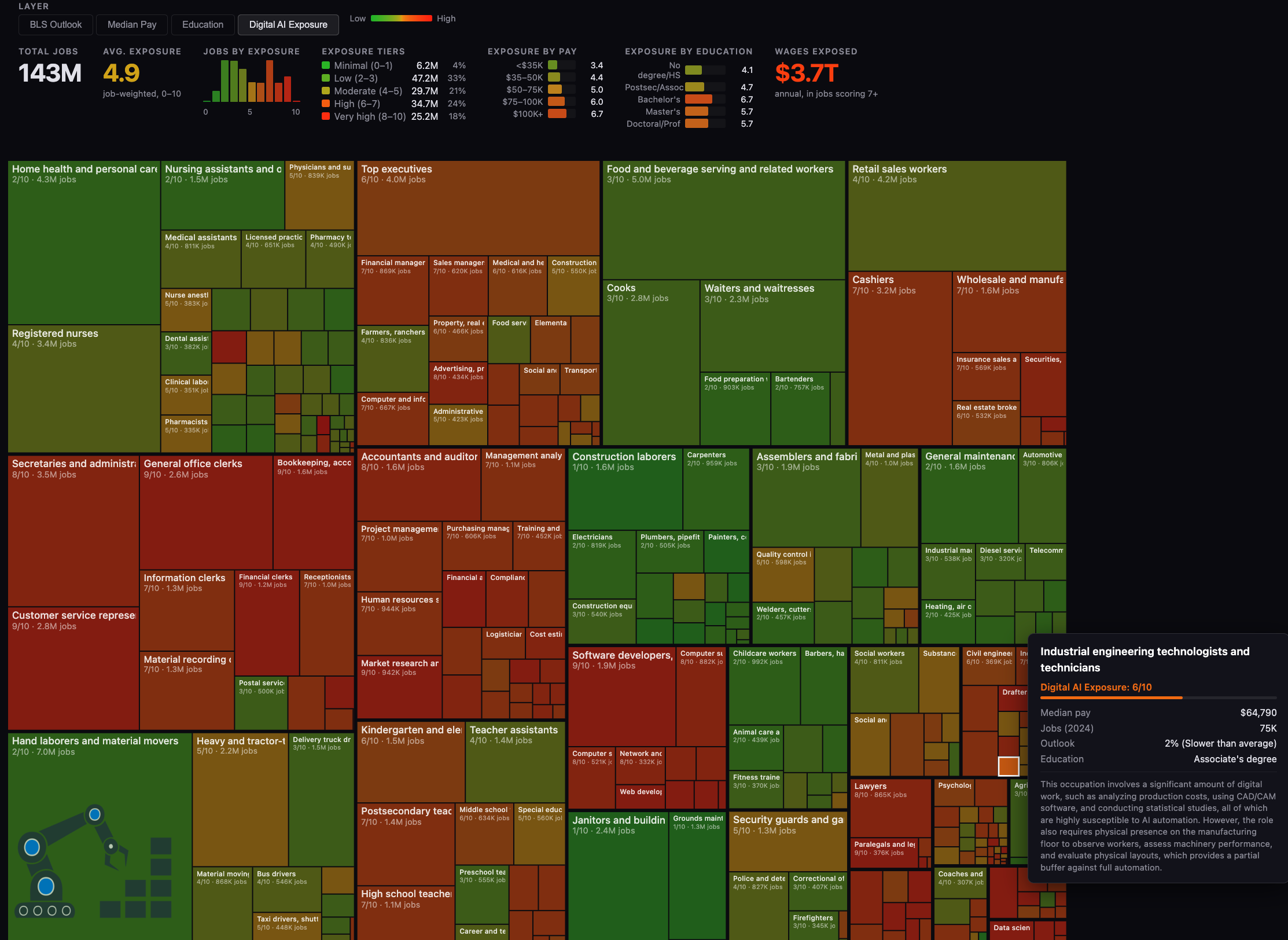
According to a research tool by Andrej Karpathy /Karpathy's Blog/ industrial engineering technologists face a moderate 6/10 AI exposure because their data-driven CAD and cost-analysis tasks are perceived as highly automatable, yet protected by the physical buffer of on-site floor inspections. In contrast, manual manufacturing roles like assembly and welding maintain low 2/10 to 3/10 exposure scores due to the persistent difficulty of replicating human dexterity in unstructured environments. Broadly, the analysis reveals a paradox where higher-paying, education-intensive roles are significantly more vulnerable to digital AI than the foundational labor powering the factory floor.
What do you find interesting about this analysis?
New in 2026: We are gifting a 1-year paid subscription to the first person to identify the content link AND cultural reference to the title/subject line of this week’s digest. Comment on this post with your guess before next week’s digest is released to be eligible!
Last week’s answer: The Catalina Wine Mixer is a scene in the movie Step Brothers and inspired an annual event by the Catalina Island Company.
Assembly Line
This week’s Industry 5.0 breakthroughs and frontier technologies of the built world.
🏭🦾 Inside Rockwell Automation’s Factory Where Automation Is Built
✍️ Author: David Petersen
The assembly line, fabricated in large part by Calvary Robotics, incorporates the iTRAK modular conveyance system, along with plenty of Rockwell controllers, drives, and I/O, to progress the product along the assembly stages.
The assembly stations themselves are nearly all operated robotically. Depending on the needs, the robots are gantry, SCARA, articulated, or delta styles, some floor-mounted and others mounted above the line. Specialized grippers pick each piece as it builds the contactors according to the order specifications.
Read more at Control.com
🦾 Universal Robots and Scale AI Launch Imitation Learning System to Accelerate AI Model Training, Bridging the ‘Lab-to-Factory’ Gap /IMD/
🎪🦾 From DX to AX: AW 2026 Signals the Rise of Autonomous Manufacturing /EETimes/
📐 Engineering journey of a lightweight drone rotor blade with tape‑sandwich injection moulding
Developing a next generation drone rotor blade calls for new material concepts, accurate process control and smart manufacturing strategies. The objective behind this project was to design a blade that combines very low weight with strong mechanical robustness in demanding flight conditions.
Together with specialists in composites, simulation and moulding technology, a fully automated tape sandwich injection moulding workflow was created. Continuous carbon fibre thermoplastic tapes form the outer structure and are positioned in the mould with high accuracy. The centre of the component is then formed by injecting a short fibre reinforced compound that expands slightly during processing.
🦾 Rapid Operator AI - Hardware, Vision, and Physical AI in One Solution /Vention on YouTube/
Arburg Reveals Production Plans, New Technologies and Results /Plastics Technology/
🧠 Unlocking Industrial Knowledge with AI Agents
We sit down with Jakub from Zeta Alpha to uncover how companies like Festo are leveraging advanced search, RAG, and agentic AI to unlock decades of expertise buried in documents and data silos. We share practical examples, discuss integration challenges, and debate the future of specialized versus generic AI in the industrial landscape.
📑 Factory data could unlock £129bn in UK output report from FourJaw /The Engineer/
🚛🧠 Inside Kodiak AI and the Future of Driverless Freight with Founder and CEO Don Burnette
🚛🧠🤝 Nissan, Uber, Wayve unveil robotaxi tie-up /Reuters/
🚛🧠🤝 Uber and Rivian Partner to Deploy up to 50,000 Fully Autonomous Robotaxis /Rivian/
Should Robot Generalists Get Off Their High Horse?
A conversation between @AnneliesGamble and @Ken_Goldberg, professor of Robotics and Automation at UC Berkeley
The assumption has been: just collect data on everything out there and throw it all together, and it will suddenly start to become general. That has not panned out, and that’s not what customers are looking for.
Even if generalist systems improve, most customers aren’t looking for a robot that might eventually do many things. Many want a robot that can at least do one thing really well, over and over again. “Most successes in robotics require 99.99% uptime,” @samanfarid, CEO of Formic, told me. “Most people underestimate how hard that bar is to hit.” Not to mention, real deployments are also incredibly complex.
Read more on Annelies Gamble on X
Industrial Robotics Drive Shift Toward Physical AI /EETimes/
From Simulation to Production: How to Build Robots With AI /NVIDIA/
Physical AI: from ST sensors to a robotics platform, how innovation can only happen through collaboration /STMicro/
📐💿 Design Conductor: An agent autonomously builds a 1.5 GHz Linux-capable RISC-V CPU
Design Conductor (DC) is an autonomous agent which applies the capabilities of frontier models to build semiconductors end-to-end -- that is, from concept to verified, tape-out ready GDSII (layout CAD file). In 12 hours and fully autonomously, DC was able to build several micro-architecture variations of a complete RISC-V CPU (which we dub VerCore) that meet timing at 1.48 GHz (rv32i-zmmul; using the ASAP7 PDK), starting from a 219-word requirements document. The VerCore achieves a CoreMark score of 3261. For historical context, this is roughly equivalent to an Intel Celeron SU2300 from mid-2011 (which ran at 1.2 GHz). To our knowledge, this is the first time an autonomous agent has built a complete, working CPU from spec to GDSII. This report is organized as follows. We first review DC’s design and its key components. We then describe the methodology that DC followed to build VerCore -- including RTL implementation, testbench implementation, frontend debugging, optimization to achieve timing closure, and interacting with backend tools. We review the key characteristics of the resulting VerCore. Finally, we highlight how frontier models could improve to better enable this application, and our lessons learned as to how chips will be built in the future enabled by the capabilities of systems like DC.
Read more at arXiv
“Entire product categories that were previously too low-volume to justify a tape-out are now buildable.” /anand iyer on X/
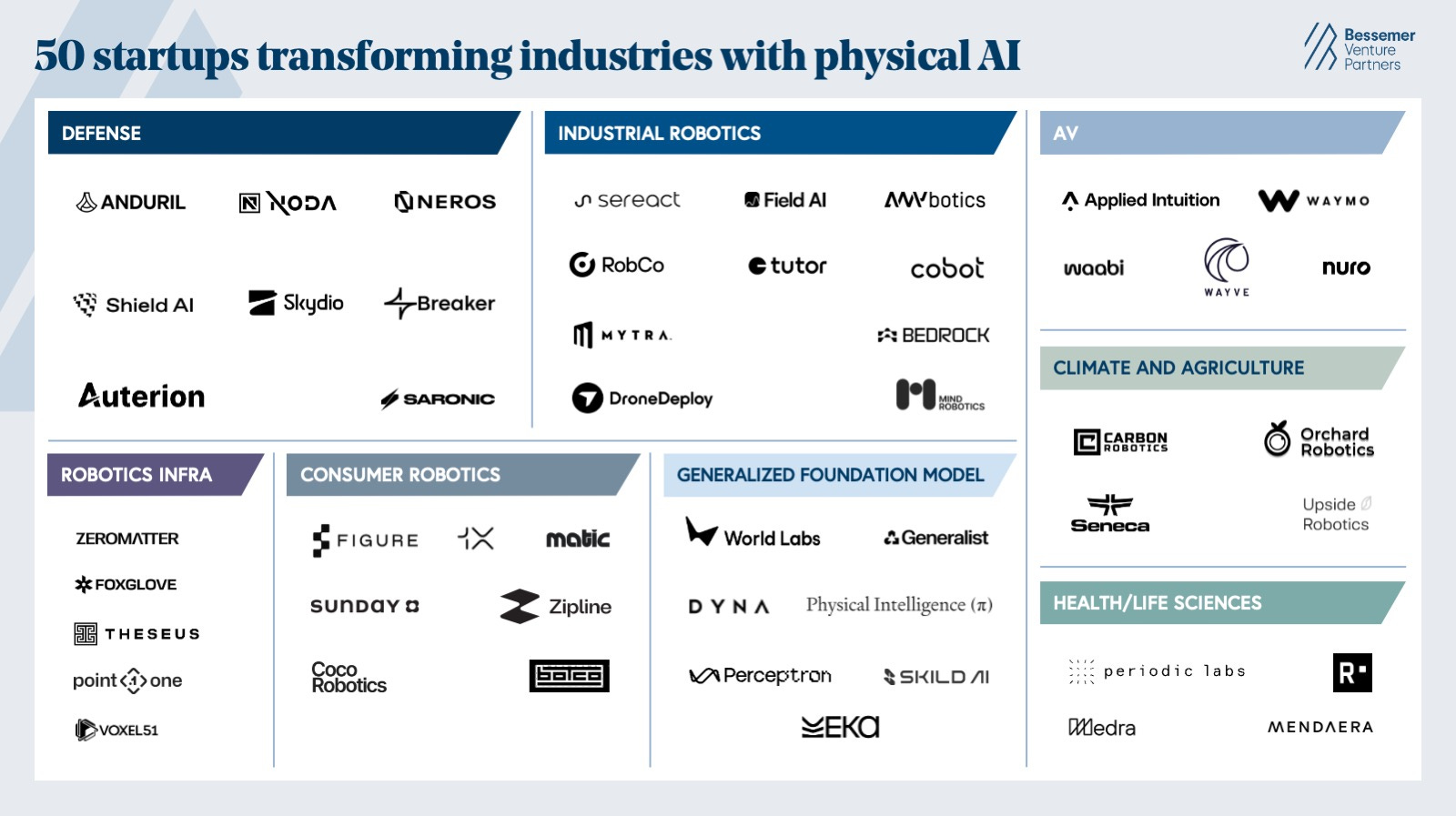
This VC firm, Beacon Manufacturing, is helping startups to scale up manufacturing in Detroit /Crain’s Detroit/
New Product Introduction
Highlighting new and innovative facilities, processes, products, and services
🦾🧠 NVIDIA and Global Robotics Leaders Take Physical AI to the Real World
NVIDIA is partnering with the global robotics ecosystem — including leading robot brain developers, industrial robot giants and humanoid pioneers — to power production-scale physical AI. NVIDIA also unveiled new NVIDIA Isaac™ simulation frameworks and new NVIDIA Cosmos™ and NVIDIA Isaac GR00T open models for the industry to develop, train and deploy the next generation of intelligent robots.
In addition, during his GTC keynote, Huang previewed GR00T N2, a next-generation robot foundation model based on DreamZero research. Built on a new world action model architecture, the model helps robots succeed at new tasks in new environments more than twice as often as leading vision language action models. Slated to be available by the end of the year, GR00T N2 currently ranks No. 1 on MolmoSpaces and RoboArena for generalist robot policies.
Read more at NVIDIA
Newton Adds Contact-Rich Manipulation and Locomotion Capabilities for Industrial Robotics /NVIDIA Developer/
GTC Spotlights NVIDIA RTX PCs and DGX Sparks Running Latest Open Models and AI Agents Locally /NVIDIA/
RoboForce Raises $52M to Scale Physical AI Robo-Labor /Business Wire/
Business Transactions
This week’s top funding events, acquisitions, and partnerships across industrial value chains.
💰 Partech’s €300M Impact Fund targets Europe’s next generation of industrial and climate tech leaders /Tech.eu/
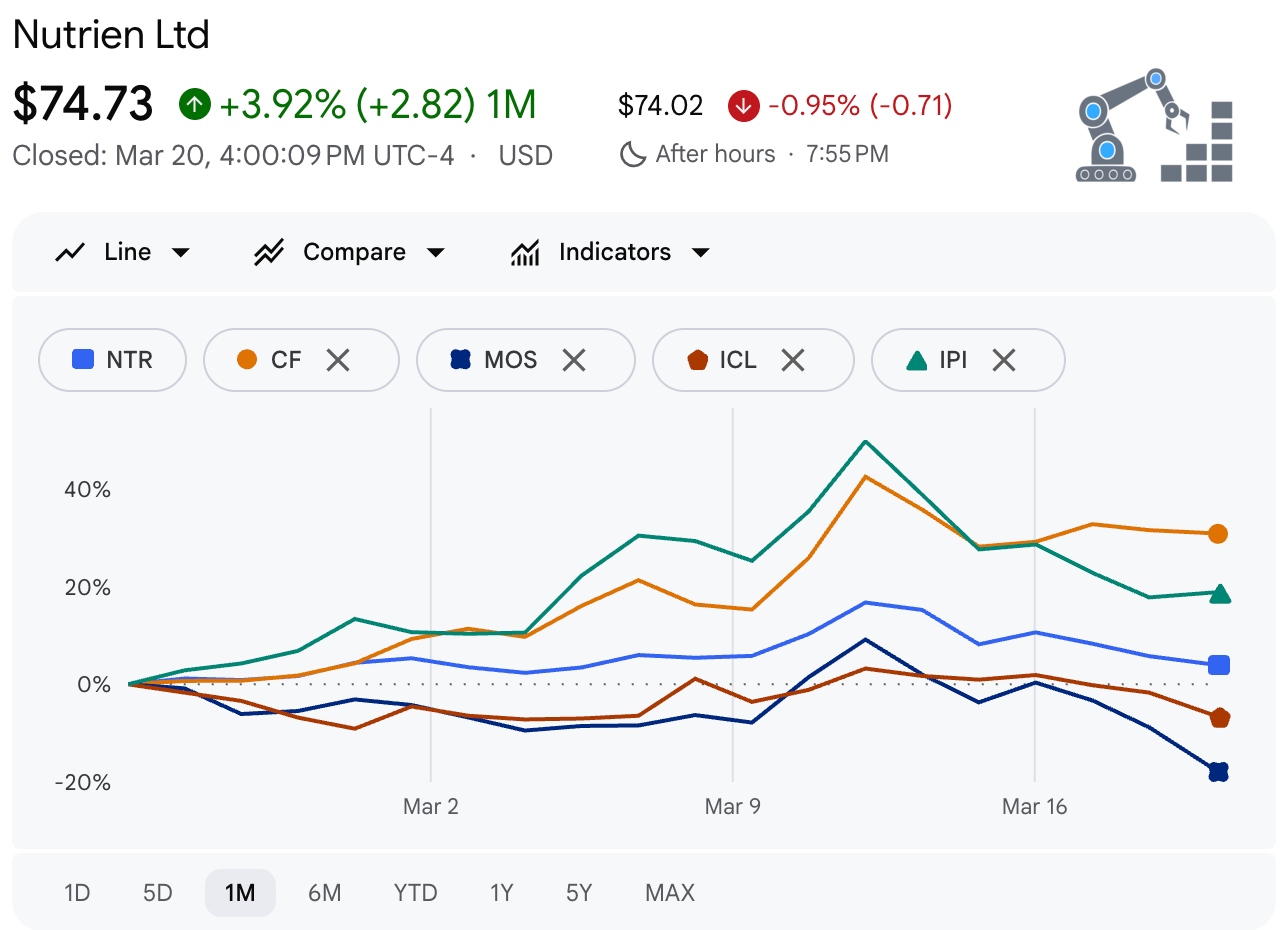
🇳🇿🐄 Halter AI Cow Collar Startup reaches $2 Billion Valuation
Billionaire Peter Thiel’s venture capital firm, Founders Fund, is set to lead the financing, said the people, who asked not to be identified discussing private information. The talks are ongoing and details could change.
Halter’s technology is designed to create a virtual fence for cattle and enable farmers to monitor the animals’ locations and health indicators through an app. Its collars, which are solar-powered, connect to farmers’ phones to allow them to manage pastures remotely — for example, a rancher can herd their cows using vibrations and audio cues from the collars.
Read more at Bloomberg
🍖 Cargill uses AI to get more meat from the bone as beef prices soar /FT/. TheirCarVe AI system uses computer vision to recover up to 0.5% more meat per carcass by identifying leftover scraps that would otherwise be wasted.
🇬🇧 Cocoon Secures $15M Series A to Fix A Critical Supply-Demand Gap in the Concrete Industry
Cocoon Carbon, a company unlocking a new, scalable supply of key materials used to make concrete, announced the closing of a $15 million Series A round. The investment was co-led by 2150 and Brick & Mortar Ventures, investors in the built environment and construction sectors. The round included participation from TVC (The Venture Collective) and continued support from existing investors Wireframe Ventures, Celsius Industries, Gigascale Capital, and SOSV.
Cocoon unlocks a new source of SCMs by converting an underutilized and robust supply of steel slag, a byproduct of electric arc furnaces (EAFs), into a low-cost, high-performance cement replacement. EAFs re-melt scrap using electricity, compared to coal powered blast furnaces that turn iron ore into pig iron. With tens of millions of tons of steel slag produced annually in the U.S. and Europe, and EAF steelmaking projected to double by 2050, Cocoon expands the domestic supply base concrete producers rely on to keep costs stable. Cocoon’s new product matches the performance of traditional SCMs while reducing the embodied CO2 of concrete by up to 40%.
Read more at Business Wire
🇺🇸 Rubi Raises $7.5M and Secures Over $60M in Offtake Term Sheets, Advancing Commercialization of Its Breakthrough CO2-to-Materials Platform /PR Newswire/
🇩🇪 Level Nine raises €4M to unlock local feedstocks for chemicals /Tech.eu/ by developing advanced catalysts to enable sustainable chemical production, converting biomass and waste into renewable materials while improving efficiency and supporting industrial-scale adoption.
🇺🇸 V-Glass Secures $3M Investment to Initiate Move from Lab Scale Production into a Pilot Plant /Business Wire/. V-Glass has developed next generation platform technology enabling the low-cost production of vacuum insulated glass (VIG) having 2-3x the thermal performance of ENERGY STAR® windows, lasting twice as long, and costing no more to manufacture.
🇺🇸 Tenkara Raises $7M led by True Ventures to Build Ops Agents for US Manufacturers
Tenkara, the company building ops agents for US manufacturers, announced $7 million in funding led by True Ventures. The round includes participation from HF0, WndrCo, Articulate Capital, Night Capital, SF1, Transpose, early employees at Flexport, and others.
Tenkara is building the next-generation tooling for supply chains. The company’s agents take on the back-office burden so that lean teams can operate like organizations 10 times their size. In its first 18 months, Tenkara signed multiple seven-figure contracts with U.S. manufacturers.
Read more at PR Newswire
🇩🇪 Fibionic secures €3 million seed funding for bionic fiber placement
✍️ Author: Grace Stubbins
Fibionic (Götzens, Austria), a deep-tech startup founded in 2021, has announced the successful closing of a €3 million seed financing round led by co-lead investors Redstone with Euregio+, Caesar and Leap435, and supported by various angel investors. This financing will enable the lightweight engineering company to further industrialize its nature-inspired technology for precise fiber placement and drive market entry into new industries.
Fibionic addresses material and automation inefficiencies via fibionic fiber placement (FFP). The patented, sustainable process uses bionic principles to align fibers specifically along actual load paths, inspired by structures found in nature, such as the wings of a dragonfly. FFP achieves cycle times of up to 1 minute per component, offering optimization potential for composites manufacturing — high-performance, stable components with minimal material use.
Read more at CompositesWorld
Looking for additional content? Paid subscribers get more stories delivered each week as part of Overcapacity!