


Shop Talk
Capturing this week’s zeitgeist
Tesla is reallocating scarce factory capacity, capital, and engineering resources from a complex, lower-volume vehicle to a simpler, higher-priority one aligned with its autonomy and robotaxi strategy.
Gigafactory Texas has finite floor space, specialized equipment, labor, and engineering bandwidth. Cybertruck production locks up a line with installed capacity well above actual demand (roughly 125,000 units/year capacity vs. ~20,000 U.S. sales in 2025 and ~70,000 total since late 2023, far short of the earlier 250,000/year target).
Musk explicitly framed it as opportunity cost rather than pure unprofitability: the complexity of continuing Cybertruck is outweighed by the value of incremental Cybercab production. Cybercab is a two-seater purpose-built robotaxi (no steering wheel/pedals) that Tesla is already producing in Texas and deploying in its Austin robotaxi fleet. It supports the company’s broader shift toward high-utilization autonomy services and robotics (similar to earlier decisions to end Model S/X production to free space for Optimus).
It is insanely f%&#ing hard to build a high-volume factory. That’s why. Prototypes are trivial by comparison.
Building additional factory space for both products is not a simple alternative. The rational capital decision is usually to reallocate existing, already-debugged capacity to the higher-value product rather than build parallel capacity for a lower-priority one. The Cybertruck line’s complexity makes that trade-off especially clear.
Heard on the Floor
More than a decade in, the most insane realization is that software is the key to reaccelerating hardware engineering. But in a way that I don’t think is widely understood or implemented, even in the burgeoning hard tech community.
/Founder & CEO Boom Supersonic Blake Scholl on X/
This is pretty much the map for new hardware today. /Nominal’s Shawn Scully on X/
This is exactly the vision we started Flux with. /Flux’s Matthias Wagner on X/
Please spread the word of Exponential Industry by sharing the publication
Assembly Line
Thought provoking stories across the industrial world.
From the Edge to Orbit: Anduril’s Journey to Space
In just two years, Anduril went from a company known for ground-based command-and-control software and autonomous robots to putting its own spacecraft—Anduril-216 (internally “Lectronimo”)—into orbit.
The story traces that sprint: starting with Project Jan (an on-orbit edge processor that proved Lattice software could work in space), then building modular payloads for real-time compute, long-wave infrared sensing, and smart power management. Internally funded and partnered with Apex, the small team stood up clean rooms, an ops center, and relentless testing under the pressure that “failure wasn’t an option.” After a tense launch on SpaceX’s Transporter-17 and an early radio glitch, the satellite is now operating nominally—delivering imagery and validating autonomous operations for Space Domain Awareness.
It’s a rapid, high-stakes case study in how a software-first defense company is forcing its way into contested orbital environments.
Read more at First Breakfast
How 3D Printing Is Transforming The Auto Industry
A car’s rear floor used to be 70 stamped steel parts. Now it is one shot of aluminium /Konstantin Saifoulline on X/. Introducing Airsup: AI that helps you debug your factory /Airsup/
We Built a SCADA for a Dam and a Root Cause Analysis Bot in a Couple of Hours

A World Beyond Crude
A deep dive into the coming return of chemurgy—the old idea of turning farms, forests, and waste streams into chemicals instead of relying almost entirely on crude oil.
Adrian DiMarco (Tolefin) lays out why the shift is becoming necessary: crude’s economics are unbeatable today, but its centralized supply is fragile, and the resource won’t last forever. He revives the interwar chemurgist movement (Ford, Edison, crop-to-rubber experiments) and then maps the modern alternatives like lignocellulosic biomass, waste plastics, algae, CO₂, and more along with the conversion routes, scale challenges, and why the near-term wins are likely higher-value specialty chemicals rather than a straight “crude 2.0.”
A practical, numbers-heavy look at how the chemical industry could start hedging against petrochemical dependence.
Read more at The Polymerist
Inside Alaska’s Oil Paradox /Bloomberg on YouTube/
Solugen is reinventing the trillion-dollar chemical manufacturing industry by combining biology and chemistry in a new way /YC on YouTube/
New Product Introduction
New and innovative facilities, processes, products, and services
Introducing Pyra: An Intelligent System for Autonomous High-Temperature Materials Processing
Furno Materials introduces Pyra, its physics-based intelligence system paired with a new reactor architecture, as the foundation for what it calls industrial general intelligence (IGI)—or, more simply, “alchemy in a box.”
The piece starts with cement (responsible for ~8% of global CO₂) and explains why the company abandoned the century-old rotary kiln in favor of a compact, responsive reactor that delivers heat directly into the material. It argues that bolting software onto legacy hardware is like adding LiDAR to a horse-drawn carriage: true intelligence requires machines that can sense, adapt in minutes, and transfer learning across materials and sites. The same platform is positioned to handle not just cement but lime, alumina, lithium, steel, and beyond.
Read more at Furno Materials Inc.
Gemini Robotics 2.5 accelerates real-world general dexterity
The ultimate measure of a robotics model is whether it can perform dependably in an active workplace. To put Gemini Robotics 2.5 to the test, we partnered with Apptronik and Mercedes-Benz to use Apollo 2 humanoid robots on active automotive production lines in Kecskemét, Hungary, and Sindelfingen, Germany.
Using our embodied reasoning model (Gemini Robotics ER) to keep track of the workflow, and the Gemini Robotics 2.5 actions model to control its hands and arms, the robot reaches into supply bins, picks up metal automotive brackets, and places them into sequencing containers, all while correcting for any gaps. Achieving a 96% success rate, this pilot shows promising progress toward widespread real-world industrial applications.
Read more at Google DeepMind
Skild is open-sourcing Steel, an internal physics solver built with NVIDIA, unlocking scaleable simulation for manipulation for everyone /GitHub/.
Kei trucks for America, Toyota makes it happen
✍️ Author: Jonathan M. Gitlin
A Kei car must fit within the following dimensions: 11.2 feet (3.4 m) long, 4.9 feet (1.5 m) wide, and 6.6 feet (2 m) tall, with an engine displacement of no more than 0.66 L and an output of 63 hp (47 kW) or less. That’s a far cry from the more than 16 feet (4.9 m) of a full-size pickup truck, but it makes sense for a country where you’re not allowed to buy a car unless you have somewhere to park it, with those spaces being at an absolute premium.
“The future of mobility will not be defined by one vehicle, one technology, or one way of thinking,” said Simon Humphries, Toyota’s chief branding officer and head of design. “Scion by Toyota gives us a place to challenge conventional thinking, explore new possibilities, and create mobility in new ways. The KEI-01, SxS, and BKE concepts each represent a different possibility—and together, they show what can happen when curiosity leads the way.”
Read more at Ars Technica
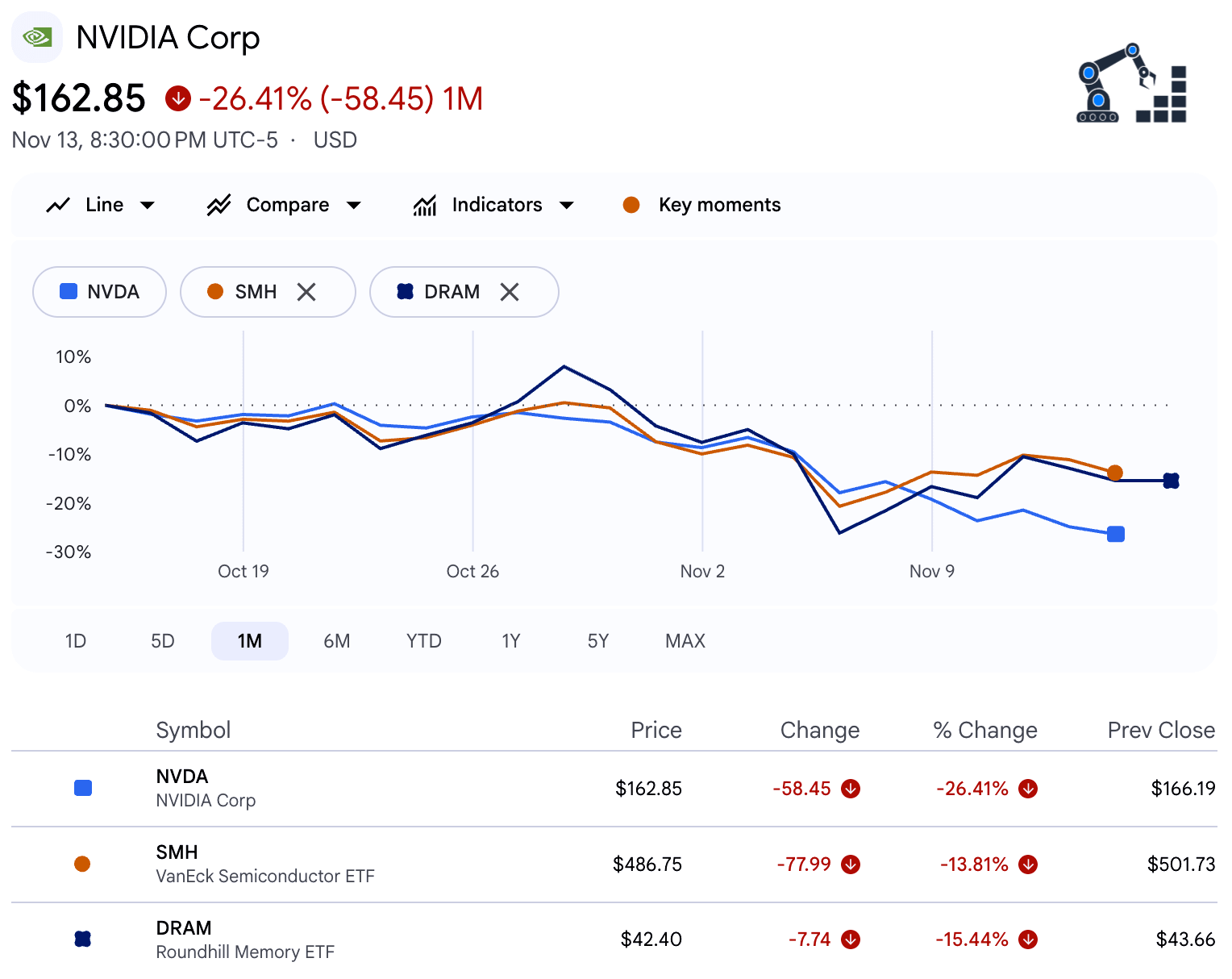
Nvidia is set to report its fiscal third-quarter 2027 financial results on Tuesday, November 17, 2026, after the market close /Morningstar/.
NVIDIA GTC Berlin 2026: What’s next for industrial AI and AI infrastructure /IoT Analytics/
Business Transactions
Top funding events, acquisitions, and partnerships across industrial value chains.
Axon Invests $1.2 Billion in Skydio to Build the Future of Drone as First Responder
Axon (Nasdaq: AXON), the global leader in public safety technology, announced an additional $1.2 billion investment in Skydio. The agreement, which will add approximately 20% to Axon’s fully diluted ownership in Skydio at a $5.2 billion pre-money valuation, builds on a partnership that is already bringing Skydio drones to public safety agencies across the U.S., marking a major expansion of Axon’s Drone as First Responder (DFR) program.
Axon will also become Skydio’s exclusive distributor for public safety in the U.S. and Canada. Skydio serves more than 1,500 public safety customers, and more than 28 million Americans now live within two miles of a Skydio DFR dock. At agencies deploying Skydio DFR, priority response times have been reduced by as much as 65%, with drones arriving before officers on roughly 80% of calls where they are deployed. That earlier visibility can support safer responses, help de-escalate potentially deadly situations, locate missing children and other vulnerable people, and improve outcomes when every second matters.
Read more at PR Newswire
SkyDrive Raises Funds from Tobu Railway and Tobu Top Tours to Accelerate eVTOL Deployment in Kanto /Business Wire/. Through this partnership, the companies will work closely to accelerate commercial eVTOL deployment in the Kanto region by combining the Tobu Group’s extensive transportation and tourism assets with SkyDrive’s aircraft development and operational expertise.
Physical AI leader Agile Robots raises $500 million Series F at $8.5 billion valuation to accelerate global growth
The SoftBank Group-led round brought together investors spanning the automotive, artificial intelligence, digital and industrial technology sectors including among others NVIDIA, Hitachi Group (Hitachi and Hitachi Ventures) and T.Capital. The funding will support increased production capacity and expansion into key markets. Agile Robots plans to strengthen its presence in the United States and accelerate the development of innovative robotics applications.
In addition, Agile Robots will continue to build out production capacity, including in Germany. Early in 2026, Agile Robots opened a new production site at Fürstenfeldbruck, near Munich, Germany, to meet rapidly rising demand. The site has the capacity to produce up to 10,000 legged and wheeled humanoid robots annually.
Read more at Agile Robots
Atlas On a Roll /Boston Dynamics/. What happens when you put wheels on a humanoid and let a learned controller drive it? Boston Dynamics swapped the feet on their Atlas® robot to find out.
Path Robotics Announces $300 Million Series E Financing at $2.45 Billion Valuation to Scale Physical AI for Manufacturing
Path Robotics, the global leader in physical AI for manufacturing, announced $300 million in Series E financing at a post-money valuation of $2.45 billion, led by Georgian, an AI-focused growth equity firm. The round includes participation from existing investors Addition, Drive Capital, IronArc Ventures, Tiger Global, Yamaha Motor Ventures and its affiliates, and additional investors D. E. Shaw Ventures and NAVER Ventures. Emily Walsh, partner at Georgian, will join Path Robotics’ board of directors.
I learned to weld at 8 years old in my family’s garage in Ohio. My dad eventually turned that garage into a manufacturing company in Warren, Ohio. I saw firsthand how difficult it was to build a manufacturing business in the US. The challenge wasn’t product demand. It was production.
/Founder and CEO Andrew Lonsberry on X/
The investment follows a period of rapid commercial expansion for Path Robotics, with annual recurring revenue (ARR) growing 17-fold over the past 18 months as the company scales deployments across major industrial customers in North America. The new capital will accelerate the company’s efforts to deploy its physical AI platform across industries critical to U.S. industrial capacity, support expansion beyond welding into new manufacturing tasks and robotic form factors, along with increased investment in AI model training.
Read more at Business Wire and Bloomberg
Nominal Raises $240M at a $3B Valuation to Build the Intelligence Platform for Hardware Engineering
Nominal, the Hardware Intelligence Platform, announced a $240 million Series C at a $3 billion valuation, led by Lightspeed Venture Partners and co-led by Insight Partners. Other major investors include Lux Capital, Sequoia, General Catalyst, Founders Fund, Avenir, Salesforce Ventures, M13, Lockheed Martin Ventures, Red Glass Ventures, PSP Growth, and Deployment Capital.
Over the last year, we’ve worked alongside our customers to answer one important question: What does it take for AI agents to earn their place in hardware engineering?
We take that question and the implications seriously. Hardware operates in the physical world, where the stakes are high, the constraints are real, and getting things right really matters. Moreover, the delta between the AI frontier and what many of our customers have available to them on a day-to-day basis in the industrial sector could not be wider than it is today. To date, agents, models, and purpose-built infrastructure haven’t been built with their use-cases in mind. In a world where context and data is spread across machines, files, drawings, spec sheets, test ranges, manufacturing lines, and most importantly, the brains of the very human operators, engineers, and technicians that power the physical world.
/Co-founder and CEO Cameron McCord on X/
The funding will support deeper products for engineers and engineering enterprises. Nominal is developing agents and applications for work across a machine’s lifecycle, from requirements verification and planning to scheduling and fleet health. The company will also expand into new industries and regions, including through strategic acquisitions. This year, Nominal acquired Fid Labs, whose team is developing Nominal’s agents, and Pull Systems, extending the platform into automotive.
Read more at GlobeNewswire and Nominal