


Shop Talk
Capturing this week’s zeitgeist
Heard on the floor
One thing that has surprised me is how little the CAD tool it's using seems to matter. I've worked with LLM + Fusion, CadQuery, or just JS/Python with lower level libraries generating meshes directly and all of the seem to work ok. Though I suspect the ideal combo is still yet to emerge. Is it possible we can just bypass BREP and traditional parametric CAD entirely for code + meshes?
/Formlabs CEO Maxim Lobovsky on X/
We are now entering into an era where any product can be created exactly to a consumer's preferences & needs... I know nothing about metal fabrication or electrical engineering. /Nikita Bier on X/
Please spread the word of Exponential Industry by sharing the publication
Assembly Line
This week’s industrial breakthroughs and frontier technologies of the built world.
🖨️🛢️ 3D Printing ROCKET FUEL!
Can you actually 3D print rocket fuel? A visit Virginia Tech and the PropEL (Propulsion and Energetics Laboratory) team to see how advanced additive manufacturing is transforming aerospace engineering. This video breaks down the science of rheology and thixotropy behind direct-ink-write printing, see how mixing gradients dynamically inside the nozzle allows engineers to custom-program burn rates, and assemble a solid-fuel grain into a hybrid rocket motor for a live static test fire!
Firehawk Aerospace CEO outlines plans for Lawton rocket propellant facility /KSWO7 News/
💰🇺🇸 JPMorgan, Ford to Invest Billions in Michigan Manufacturing
Michigan LIFT Launches to Accelerate Industrial Innovation, Scale Manufacturing Growth and Strengthen U.S. Competitiveness /MEDC/ with Ford, JPMorganChase, MEDC, and Newlab anchoring the initiative /JPMorganChase/
Inside the $100 Billion Bet to Bring Manufacturing Back to the Rust Belt /YouTube/
A $5,000 Bike Shows Why It’s Hard to Build in America /Bloomberg/
This Screw Is Needed for Missiles and Planes. Buying One Can Take Years. /NYT/
🤖💱 What work can robots do?
Anthropic’s economic research introduces a task-level robot exposure index evaluating how much human labor can physically be automated by contemporary robotics across various environments. Assessing thousands of tasks from the U.S. O*NET database, the study finds that modern autonomous machines can already execute roughly 74% of physical job tasks (representing about 34% of all U.S. working hours), primarily in structured environments like factory lines and warehouses. Combined with LLMs handling cognitive and text-based labor, roughly 80% of total working time across the economy has exposure to AI or robotics, leaving unexposed only those tasks requiring high-dexterity fine motor skills, complex physical navigation, or deeply interpersonal communication.
Despite this extensive technical capability, economic adoption remains heavily constrained by cost, hardware dexterity, and regulatory hurdles. Currently, robots are cost-competitive with human workers for just 0.3% of tasks; at historical hardware price-decline rates, reaching even a 10% cost-competitive threshold would take around 40 years. However, historical backtests spanning five decades confirm that occupations with higher initial task exposure reliably suffered relative declines in long-term wage and employment growth, suggesting that sectors already seeing robotic entry—such as commercial driving, packing, and logistics—will face economic disruption well before unstructured trades like plumbing or nursing.
Read more at Anthropic
Robotics Model T Moment? /ROBO/
Hidden Factory
Unseen patterns in emerging industrial technology
This week’s hidden factory reveals the successful pattern behind prescriptive maintenance unicorns…
New Product Introduction
Highlighting new and innovative facilities, processes, products, and services
🤏🦾 New Hands for Atlas at Boston Dynamics
This new generation hand is the perfect companion for Atlas. With 13 degrees of freedom, these hands are directly actuated, built for high fidelity simulation to enable sim-to-real RL, and designed from the ground up for dexterous physical work .
Robot Hands for Modern AI and Real Work /Boston Dynamics/
Tangent Robotics Raises 4.5M in Pre-seed Funding to Advance Fine Motor Skills for Robot Dexterity /Business Wire/
🚀 SpaceX’s Starship makes orbital debut deploying Starlinks before early ending
SpaceX’s giant Starship rocket reached orbit for the first time on Monday and deployed new Starlink satellites, achieving milestones in its 14th test flight despite an engine failure and a decision to cut the mission short.
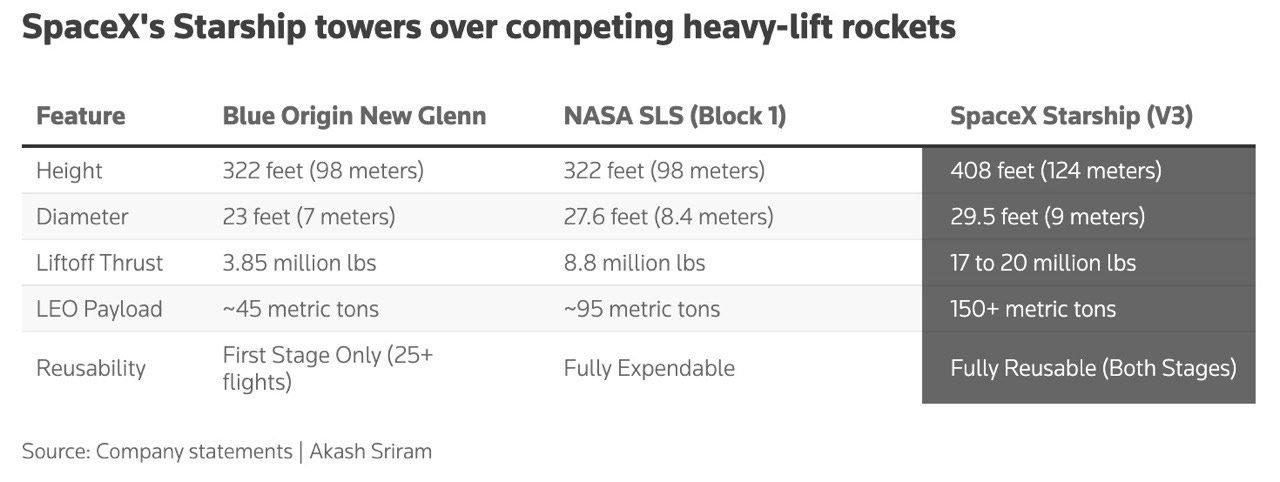
The uncrewed mission was scheduled to last 10 hours, but was reduced to three after one of Starship’s three main engines shut down prematurely following separation from the spacecraft’s lower-stage Super Heavy booster rocket.
Read more at Reuters
🗜️ First GPU-accelerated Metal Casting Solver
FastCast by Digital Metal shortens solve time to an average of just 5 minutes for most parts & trees, making casting optimization an easy, and quick path-increasing iteration and reducing lead time for our customers.
Why it’s fast: it was built for the GPU, not ported to it. Every stage runs on the same voxel grid in GPU memory, with no re-meshing and no hand-off to the CPU between stages. A flanged hub in 17-4PH took 36 seconds on a laptop GPU, against 54 minutes on the industry leading reference solver.
Read more from Founder Connor Kapoor on X
👷♂️💼🔎 Singapore’s NUSX is coming for Munich with UnternehmerTUM as its partner /Tech.eu/. What are other TU9 alumni up to? Exponential Industry Scholar has a TU9 focused search just for you!

Business Transactions
This week’s top funding events, acquisitions, and partnerships across industrial value chains.
💰 Andreessen Horowitz and Atlas Holdings Want AI Entrepreneurs on the Factory Floor /WSJ/ by recruiting a small, select group of some of the top technologists and give them premiere access to the Atlas portfolio, representing $26B in annual revenue across metals, paper, packaging, building products, automotive supply chains, energy, and logistics /Arye Barnehama on X/
🇩🇪⚡ Reverion Raises $175M Series B to Scale Production of its Dispatchable, Carbon-Negative Power Plants Tenfold
Reverion has closed a Series B funding round of $175 million to scale production of its dispatchable, carbon-negative power plants. Operating at a world-record electrical efficiency of 74.2% – measured in live customer operation with the first units from pre-series production – nearly double that of conventional generators, Reverion’s technology converts renewable gas into on-demand electricity with zero emissions, while capturing pure biogenic CO₂. The round is led by Kembara, Mundi Ventures’ European scale-up fund that backs breakthrough deeptech and climate technologies. Allianz, KfW Capital, Aurum Impact and Carbon Equity are coming on board as new backers alongside the existing investors. The company will invest the majority of the funds raised in the new production site, which is set to increase manufacturing capacity tenfold.
To meet a commercial project pipeline exceeding $2 billion in revenue potential, Reverion is investing the majority of the capital into a new megafactory in Germany. The facility will scale manufacturing capacity tenfold to 250 megawatts annually. At the company’s headquarters in Eresing, the team has recently grown from 100 to more than 200 employees; up to 800 further positions will be added at the new site. Seven power plants are already in regular operation at customer sites. Demand is rapidly expanding beyond Reverion’s home market in Germany, with the first international projects scheduled for delivery later this year.
Read more at Reverion
🇺🇸🌊☀️ NetworkOcean runs GPU on floating data center powered by solar panels in San Francisco Bay /DCD/ with a 2030 target is 1 GW/week /CEO Sam Mendel on X/
🇺🇸📐🧠 Flow Engineering Raises $50M Series B at $750M Valuation to Make Hardware Iteration as Fast as Software
Flow Engineering, the agentic platform for hardware development, announced a $50 million Series B at a $750 million valuation. The round was co-led by Antonio Gracias, founder of Valor Equity Partners and Gavin Baker, Managing Partner at Atreides Management. Sequoia Capital, which led Flow’s Series A, also participated in the round alongside Human Capital, Evantic, SV Angel, Odyssey, EQT, with contributions from Hugging Face co-founder Thomas Wolf, Mercedes-Benz CIO Jonas von Malottki, and Formula 1 world champion Nico Rosberg. Roelof Botha has additionally joined Flow’s board as an independent director and personally invested in the company.
Flow is building a platform where AI agents can continuously track changes, propagate updates across teams, and verify the results in seconds. Its goal is to reduce hardware iteration cycles from months to days, just as AI has transformed software development. Since its Series A last October, Flow has added General Motors PPU, Rivian and Volkswagen’s joint venture (RV Tech), Anduril, Stoke Space, Intuitive Machines, and Pacific Fusion as customers. They join existing customers like Rivian, Joby Aviation, Astranis, and Radiant Industries, which use Flow as their default hardware development platform.
Read more at PR Newswire
🇺🇸📐Daptic Raises $22M From Canvas Ventures, IA Ventures, 8VC and Others to Bring Compliance Into Product Development /EIN/
🇺🇸🪙🧲 Hertha Metals Secures $133.65M Series A to Produce High-Purity Iron for Domestic Rare-Earth Magnets
Hertha Metals, the steel company behind the world’s first single-step steel and high-purity iron process for lower-cost domestic production, announced the close of a $133.65M Series A round, including a $65M equity investment from the U.S. Government, executed through its Industrial Base Analysis and Sustainment (IBAS) program in partnership with the Economic Defense Unit. The round was co-led by Khosla Ventures and Doerr Capital, with participation from CEV, Pear Ventures, Gates Frontier, Niterra SUISO no MORI Fund (General Partner: Global Brain), Toyota Ventures and Siemens Financial Services. IBAS is a federal program that funds projects to strengthen and modernize the defense industrial base.
The funding will finance the construction of Hertha Chalyx, the company’s new facility that plans to produce 10,000 tonnes of steel-grade and magnet-grade high-purity iron. Chalyx, alongside Hertha’s pilot plant, Pi100, will be the first modern iron and steel innovation complex, a significant step toward reshoring iron and steel production central to IBAS’s industrial base mission.
Read more at Business Wire
🇦🇺🪙 Lynas Rare Earths to acquire Meteoric Resources /Lynas/
🇫🇷📸🧠 Inbolt Raises $12.5M to Bring Sight and Intelligence to Industrial Robots, From Stellantis and Toyota to Data Centers
Inbolt, which gives industrial robots the ability to see, think, and adapt in real time - letting them master any process, part, or station - announced $12.5M in funding. The round was led by new investor Shift4Good, a venture capital firm focused on decarbonizing transportation and energy, and joined by Bridges Climate Transition Partners, a specialist private markets investor focused on the transition to a more sustainable future. Existing investors BNP Paribas Développement and Ora Global also participated, bringing Inbolt’s total funding to $34M.
The capital will fund Inbolt’s expansion in the US, where the company opened a Detroit office in 2026, in APAC, and its entry into two new sectors: data centers and electronics manufacturing.
Read more at Business Wire